How to Know If Your Yard Needs Drainage Correction
Water in the wrong place is one of the most common property problems in Riverside County, and it’s one of the most expensive to ignore. Southern California doesn’t get much rain, but when it does, it tends to arrive in short, heavy bursts on hard, compacted ground that doesn’t absorb it fast. If your yard isn’t graded to move that water away from your home, you’ll usually see the signs long before you see the damage. Here’s how to spot them.
What Is Drainage Correction?
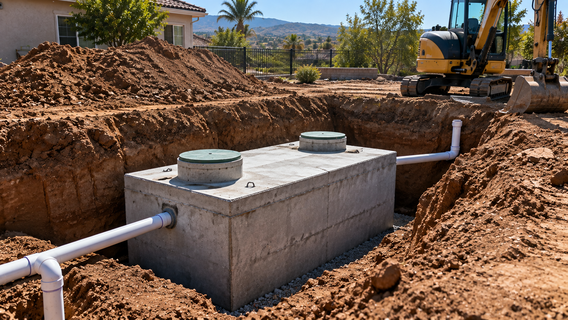
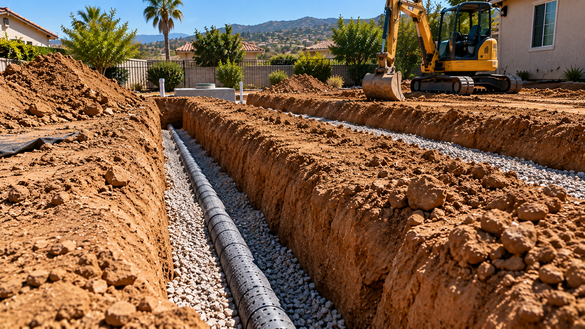
Drainage correction is regrading and trenching work that changes how water moves across your property. The goal is to direct runoff away from your foundation, walkways, and structures toward a safe discharge point, like the street, a swale, or a lower area of the lot. It usually involves a combination of regrading the soil, shaping swales, and excavating drainage trenches.
Signs Your Yard Needs Drainage Correction
Standing water 24-48 hours after rain. Water that sits on the surface for more than a day or two means the ground either can’t absorb it or has nowhere to send it. In clay-heavy soil, this is common even on lots that look level.
Water pooling near your foundation. This is the most important sign on the list. Water collecting against the house works its way into the soil beneath your foundation, and over time that can contribute to cracking, settling, and moisture problems.
Soil erosion or washouts. Exposed roots, gullies in the dirt, or soil that’s visibly moved downhill after a storm all mean runoff is traveling too fast across your property.
Soggy or muddy areas that never seem to dry out. If one patch of the yard stays wet long after the rest has dried, the grade is likely channeling water there.
Cracks or movement in patios, walkways, or driveways. Water running underneath hardscape washes out the base material and causes slabs to sink, tilt, or crack.
A yard that slopes toward the house. If the ground right next to your foundation tilts toward the structure instead of away from it, rain will head straight for the house. Even a slight reverse slope matters.
Water entering a garage, crawl space, or lower-level area. Moisture or flooding in these spots after rain is a strong signal that surface water has no proper exit route.
Neighbor runoff crossing your lot. On hillside or sloped properties, water from higher lots can funnel across yours, especially in areas like Highgrove and Grand Terrace where terrain varies from lot to lot.
Common Causes of Drainage Problems
- Original grading that was never done correctly, which is common on older properties and some new builds
- Soil settling over time, which creates low spots near the foundation
- Compacted clay soil that sheds water instead of absorbing it
- Added structures or hardscape (ADUs, patios, driveways) that changed how water travels across the lot
- Hillside runoff from neighboring or upslope properties
If you’re adding an ADU or other structure to your property, it’s worth sorting out drainage at the same time. Our ADU excavation and grading cost guide covers how a new structure changes grading requirements.
How Drainage Problems Get Fixed
Most drainage correction comes down to a few excavation and grading techniques:
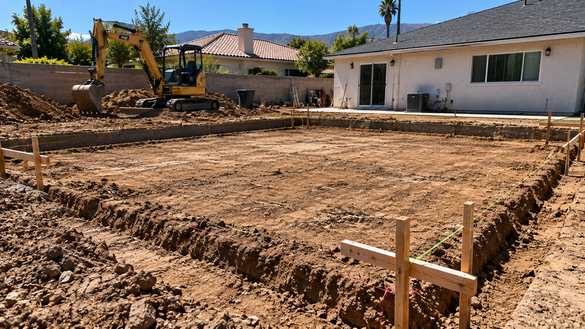
- Regrading the yard so the surface slopes away from the foundation, typically a few inches of drop over the first several feet
- Swale grading, which shapes a shallow, gently sloped channel in the soil to carry runoff to a discharge point
- Drainage trench installation, where a trench is excavated to hold drain pipe that moves water out of problem areas
- Correcting low spots by adding and compacting fill so water no longer collects there
Which approach fits depends on your lot’s slope, soil, and where the water can safely go. Many properties need a combination.
Why Timing Matters
Fall is a smart time to address drainage. Fixing grade problems before winter rains means you’ll find out whether the correction works during the first real storm instead of after a season of damage. It also keeps projects from getting delayed by wet ground, since excavation on saturated soil is slower and messier.
Call 811 Before Any Drainage Digging
Drainage work means digging, and digging means underground utilities. Before any trenching or regrading, utility lines need to be marked. Here’s what you need to know in our 811 call-before-you-dig guide.
Getting It Fixed
If you’re seeing any of the signs above, a site visit is the best way to figure out what your lot needs, since slope, soil, and water flow are specific to each property. We handle the regrading and drainage trenching side of the work throughout the area. For cost factors that apply to this kind of project, see our excavation cost guide.
Call (951) 577-1959 for a free estimate.
Frequently Asked Questions
How do I know if my yard has a drainage problem?
The clearest signs are standing water 24-48 hours after rain, pooling near the foundation, erosion or washouts, and soggy spots that never dry out. A yard that slopes toward the house is also a red flag.
How much slope should my yard have away from the house?
A common guideline is a drop of about 6 inches over the first 10 feet away from the foundation. Your specific lot, soil, and local requirements may call for something different.
Can bad drainage damage my foundation?
Yes. Water that collects against the foundation can contribute to soil movement, cracking, and moisture problems over time. That’s why pooling near the house is the most urgent drainage sign to address.
Is drainage correction a DIY project?
Minor surface fixes, like filling a small low spot, can be DIY. Regrading a whole yard or trenching for drain pipe involves heavy equipment, utility locates, and grading decisions that are best handled by an excavation contractor.
When is the best time to fix drainage problems?
Before the rainy season is ideal. Dry ground is easier to work and lets you test the fix in the first storm.
Do I need a permit for drainage work?
It depends on the scope and your jurisdiction. Larger grading projects, hillside work, or anything affecting neighboring properties may require permits. Check with your city or county, or ask us what typically applies to your area.
You might also like