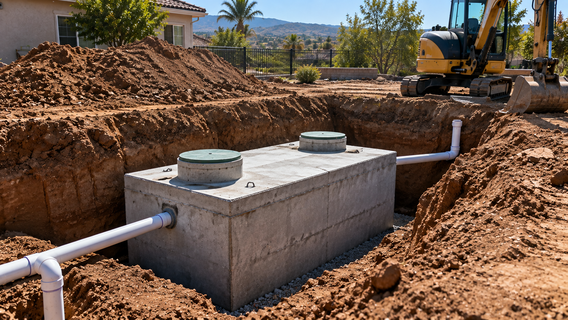
Signs Your Septic System Needs Replacement (Not Just Repair)
Not every septic problem means a full system replacement — sometimes a repair is all it takes. But knowing the difference matters, because replacing a septic system costs significantly more than repairing one, and catching the warning signs early can be what determines which category your situation falls into. Here's how to tell what you're actually dealing with.
Signs That Usually Point to a Repair
These issues are often fixable without excavating and replacing the whole system:
- A single slow drain in one part of the house, which may point to a clogged line rather than a failing tank
- A broken or damaged lid or riser, which is a straightforward fix
- A failing effluent pump (on systems that use one), which can typically be replaced without excavation
- Minor line blockages from root intrusion or debris
If the problem is isolated to one component and the tank and leach field are otherwise in good condition, repair is usually the right call.
Signs That Usually Point to Replacement
These are the signs that tend to mean the system itself — not just a part of it — has reached the end of its usable life:
Multiple slow drains throughout the house. When it's not just one sink or toilet but everything draining slowly at once, that often points to a tank or leach field problem rather than a localized clog.
Sewage odor in the yard, especially over the leach field. A properly functioning system shouldn't produce noticeable odor at the surface. Persistent smell usually means the leach field isn't processing wastewater properly anymore.
Standing water or soggy patches over the septic area. Especially in dry weather, unusually wet or spongy ground over the tank or leach field is one of the clearest signs of leach field failure.
Unusually lush, green grass over the leach field compared to the rest of the yard. While it might look like a landscaping win, it's often a sign that wastewater is surfacing and over-fertilizing that specific area.
Sewage backups into the house. This is one of the more serious signs, and usually means the system can no longer process wastewater at the rate it's coming in.
System age. Most septic systems are designed to last 20-30 years depending on maintenance, soil conditions, and usage. An aging system that's had recurring issues is a candidate for replacement even if it hasn't fully failed yet.
Failed percolation in the existing leach field. If the soil in the leach field area has become compacted or clogged over time, it may no longer be able to absorb wastewater properly, regardless of how well the tank itself is functioning.
Why This Distinction Matters for Your Budget
Repairs are typically a fraction of the cost of a full system replacement, which is why an accurate diagnosis matters. But delaying a needed replacement because a repair seems like the cheaper option can lead to sewage backups, yard damage, and even property or health hazards if the system fails completely. If you're seeing more than one of the "replacement" signs above, it's worth getting the system properly evaluated rather than continuing to patch individual symptoms.
What to Do If You're Seeing These Signs
If you're noticing more than one of the warning signs above, the next step isn't necessarily a full replacement — it's getting the site properly assessed. Since a lot of what determines repair vs. replacement comes down to what's actually happening underground (leach field condition, soil percolation, tank integrity), that assessment often starts with excavation to expose and inspect the system directly. That's where we come in: once a septic contractor or inspector has diagnosed the issue, we handle the excavation work required to access, repair, or fully replace the system.
Frequently Asked Questions
Can a septic system be repaired instead of replaced?
Sometimes. If the issue is isolated — a broken part, a clogged line, a failing pump — repair is often possible. But if the tank or leach field itself has failed, replacement is usually necessary.
How long do septic systems typically last?
Most systems last 20-30 years depending on maintenance, soil conditions, and household usage, though this varies by system type and how well it's been maintained.
Is a soggy yard always a sign of septic failure?
Not always, but soggy or unusually lush patches over the leach field — especially during dry weather — are one of the more reliable warning signs of a failing system.
What happens if I ignore signs of septic failure?
Ignoring warning signs can lead to sewage backups into the home, yard contamination, and a more expensive emergency replacement instead of a planned one.
How do I know if I need a repair or a full replacement?
The clearest way is a professional evaluation of the tank, leach field, and soil conditions. Isolated issues are often repairable, while widespread symptoms across the system usually point to replacement.
You might also like